
Millard and Linda Fuller founded the Habitat for Humanity movement in 1976 in Americus, Georgia. Built on the idea of partnership housing, Habitat for Humanity volunteers gave a hand up to those in need by working side by side with them to build safe, decent and affordable houses.
Koinonia Farm
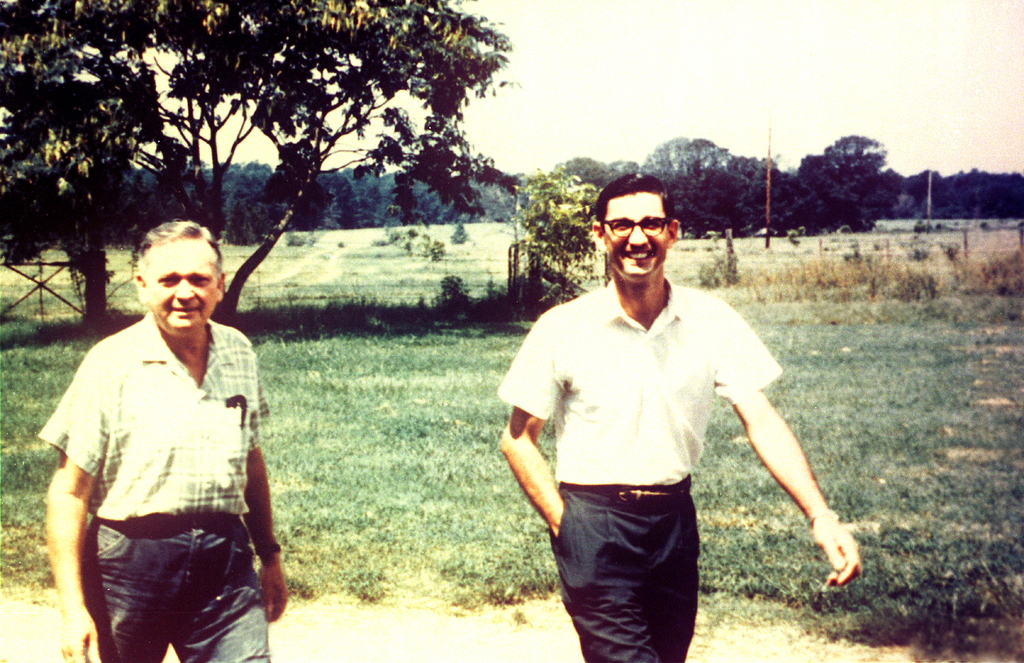
The concept that grew into Habitat for Humanity International was born at Koinonia Farm,
a small, interracial, Christian community outside of Americus, Georgia.
Koinonia Farm was founded in 1942 by farmer and biblical scholar
Clarence Jordan.
The Fullers first visited Koinonia in 1965.
They had recently left a successful business and an affluent lifestyle
in Montgomery, Alabama to begin a new life of Christian service.
At
Koinonia, Jordan and Fuller developed the concept of "partnership
housing." The concept centered on those in need of adequate shelter
working side by side with volunteers to build simple, decent houses.
The Fund for Humanity
The
houses would be built at no profit and interest would not be charged on
the loans. Building costs would be financed by a revolving fund called
"The Fund for Humanity.” The fund's money would come from the new
homeowners' house payments, no-interest loans provided by supporters and
money earned by fund-raising activities. The monies in the Fund for
Humanity would be used to build more houses.
The Fund for Humanity’s mission statement:
What
the poor need is not charity but capital, not caseworkers but
co-workers. And what the rich need is a wise, honorable and just way of
divesting themselves of their overabundance. The Fund for Humanity will
meet both of these needs. Money for the fund will come from shared gifts
by those who feel they have more than they need and from non-interest
bearing loans from those who cannot afford to make a gift but who do
want to provide working capital for the disinherited . . . The fund will
give away no money. It is not a handout.
Inception of Habitat for Humanity
In
1968, Koinonia laid out 42 half-acre house sites with four acres
reserved as a community park and recreational area. Capital was donated
from around the country to start the work. Homes were built and sold to
families in need at no profit and no interest. The basic model of
Habitat for Humanity was begun.
Zaire
In 1973, the
Fullers decided to apply the Fund for Humanity concept in developing
countries. The Fuller family moved to Mbandaka, Zaire (now the Democratic Republic of Congo.)
The Fullers' goal was to offer affordable yet adequate shelter to 2,000
people. After three years of hard work to launch a successful house
building program, the Fullers returned to the United States.
Expansion into Habitat for Humanity International
In
September 1976, Millard and Linda called together a group of supporters
to discuss the future of their dream. Habitat for Humanity
International as an organization was born at this meeting. The eight
years that followed, vividly described in Millard Fuller's book, "Love
in the Mortar Joints,” proved that the vision of a housing ministry was
workable. Faith, hard work and direction set HFHI on its successful
course.
Phenomenal growth
In 1984, former U.S. President Jimmy Carter and his wife Rosalynn took their first Habitat work trip, the Jimmy Carter Work Project,
to New York City. Their personal involvement in Habitat's ministry
brought the organization national visibility and sparked interest in
Habitat's work across the nation. HFHI experienced a dramatic increase
in the number of new affiliates around the country.
In 1985, the movement spread to Canada with the first Canadian build in Winkler, Manitoba. Two years later, Winnipeg became home to the first Canadian affiliate. Habitat for Humanity in Canada has since grown to 69 affiliates in 10 provinces and two territories and has successfully provided over 2,200 families with safe, decent and affordable housing.
Since 1976, Habitat for Humanity International has built, rehabilitated, repaired or improved more than 600,000 houses worldwide – providing shelter for more than 3 million people.
Milestones
Over the past 25 years, Habitat for Humanity Canada (HFHC) has logged more than 10 million volunteer hours, contributing to the successful completion of over 2,200 homes for low-income Canadian families. Internationally, HFHC has helped build thousands more homes.
2011Habitat for Humanity
celebrates the 2,000th Habitat home in Canada, built in Winnipeg next to
Habitat for Humanity Winnipeg’s 200th home.
ReStores celebrate their 20th year.
2010 Habitat for Humanity in Canada celebrates its 25th anniversary with 72 affiliates, 65 ReStores and almost 1,800 homes built across the country
2009 HFHC launches ReNew It! – a program to improve existing homes through renovations and repairs enabled by volunteer labour and a no-interest homeowner loan
The Right Honourable Edward Schreyer is named to the Habitat for Humanity International Board of Directors
2008 Habitat for Humanity Toronto celebrates 20 years with its 100th home
Canada’s first Energy Star certified Habitat home is built by Habitat for Humanity Wellington County
2007 14 homes completed through Women Build program and seven via Student Build
The Right Honourable Michaelle Jean, then Governor General of Canada, becomes Vice Regal Patron for HFHC
2006 Student Build takes place in Winnipeg with all homes built and funds raised by students
2005 The Global Village program is launched in Canada
70 affiliates, 38 ReStores, and 974 homes
2004 Habitat for Humanity Toronto celebrates the largest town-home project in Canada
Habitat for Humanity Saskatoon hosts the 5th Canadian Women Build
Habitat for Humanity Windsor celebrates ten years of building
2003 Habitat for Humanity Winnipeg celebrates its 100th home and the tenth Cycle of Hope bicycle tour. The Cycle of Hope allows volunteers to enjoy cycling while supporting the Habitat for Humanity Winnipeg’s cause
First Canadian Campus Chapter house built
First ever Royal (The Earl of Wessex/Prince Edward) visit to a Habitat build site
700th home built in Canada
2002 59 affiliates, 25 ReStores, and 600 homes
Pope John Paul II visits Toronto for World Youth Day where youth volunteers of Habitat for Humanity Toronto build a home onsite
2001 HFHC celebrates its 500th home, which was built in London, Ontario
Second Canadian Women Build hosted by Habitat for Humanity Grey-Bruce
2000 52 affiliates, 15 ReStores, and 400 homes
The first Canadian Women Build is hosted by Habitat for Humanity Waterloo Region – 200 female volunteers contribute their time and talents
1999 Home for Christmas Blitz holiday build in Coburg, Ontario
1998 Habitat for Humanity passes the 300th home landmark in Canada
First build in Quebec, Habitat homes have been built in all ten provinces
1997 Ten ReStores open nationwide
1996 Canada’s 200th Habitat for Humanity home is built in Moncton, New Brunswick
‘Bike Atlanta ‘96’: 50 cyclists from all over Canada cycle from South-western Ontario to Atlanta, raising more than $200,000 for Habitat for Humanity Canada
1995 25 affiliates, six ReStores, and 146 homes
Building on Faith launches
1994 ESWP: Edward Schreyer Work Project launched by former Governor General of Canada and his wife, Edward & Lily Schreyer
1993 Canada’s 100th Habitat for Humanity home is built in Saskatoon, Saskatchewan
First Jimmy Carter Work Project (JCWP) in Canada – Winnipeg (18 homes built) and Waterloo (10 homes built)
1991 World’s first ReStore is opened by Habitat for Humanity Winnipeg with the help of five volunteers
1990 HFHC’s head office is established in Waterloo, Ontario
1989 Habitat for Humanity Winnipeg pioneers the ReStore concept – ReStores are building supply stores that accept and resell quality new and used building materials in an effort to generate funds to support Habitat for Humanity building programs
1987 The first Canadian Habitat for Humanity affiliate is established in Winnipeg, Manitoba
1985 The first Habitat home is built on Canadian soil in Winkler, Manitoba
Inaugural meeting of Habitat for Humanity in Canada